What is Amazon SEO? How it works in 2026, and how it differs from Google
Amazon SEO is the work of making a product appear higher in Amazon search results without paying for the placement. Amazon ranks products by how well the listing matches the search and how likely the product is to sell. That makes it different from Google SEO, which ranks pages by how well they answer a question.
Key takeaways
- Amazon search has one goal: show the product the shopper is most likely to buy. Matching words get you considered; clicks and sales move you up.
- Amazon does not publish its ranking formula. Treat any exact list of "ranking factors" as an estimate.
- Organic and sponsored positions are separate. Track them apart, or your ads will hide a weak organic rank.
- Links and long articles, the core of Google SEO, do little for an Amazon listing.
- In 2026 titles are shorter and shoppers can ask an AI assistant, so clear, specific listing text matters more.
What is Amazon SEO?
It is improving a listing so that Amazon shows it higher for the searches that matter to you, without paying for each click.
SEO stands for search engine optimization. On Amazon the search engine is the search box at the top of the store, and what it ranks is product listings. Amazon's own guide to SEO for sellers describes it as the things you can do to make a product more visible in search results: research the words shoppers use, put them in the listing, and improve images and price.
The position you earn this way is called organic. It sits on the same page as sponsored positions, which are bought with ads. The two are easy to mix up, and telling them apart is half of doing SEO well.
How does Amazon SEO work?
In two steps: Amazon first decides which products match the search, then puts them in order by how likely each one is to be bought.
Step 1: match
Amazon compares the shopper's words with the words in your listing: the title, the bullet points, the description and the backend search terms. If an important word is nowhere in your listing, you are unlikely to be shown for it, however good the product is.
Step 2: order
Among the products that match, Amazon favours the ones shoppers are most likely to buy. Amazon does not publish the formula. Its seller help names text match, price, availability and sales history among the things that count, and sellers see the rest in practice: listings that win clicks and turn them into sales move up.
| What moves a product up | Where it comes from in your listing |
|---|---|
| Words that match the search | Title, bullet points, description, backend search terms |
| Clicks from the results page | Main image, title, price, rating |
| Sales after the click | Images, bullet points, A+ content, reviews, price |
| Being available at a sensible price | Stock, delivery speed, price next to similar products |
Be careful with exact lists of "ranking factors" and their weights. Amazon has not published one, so every such list is somebody's estimate.
How is Amazon SEO different from Google SEO?
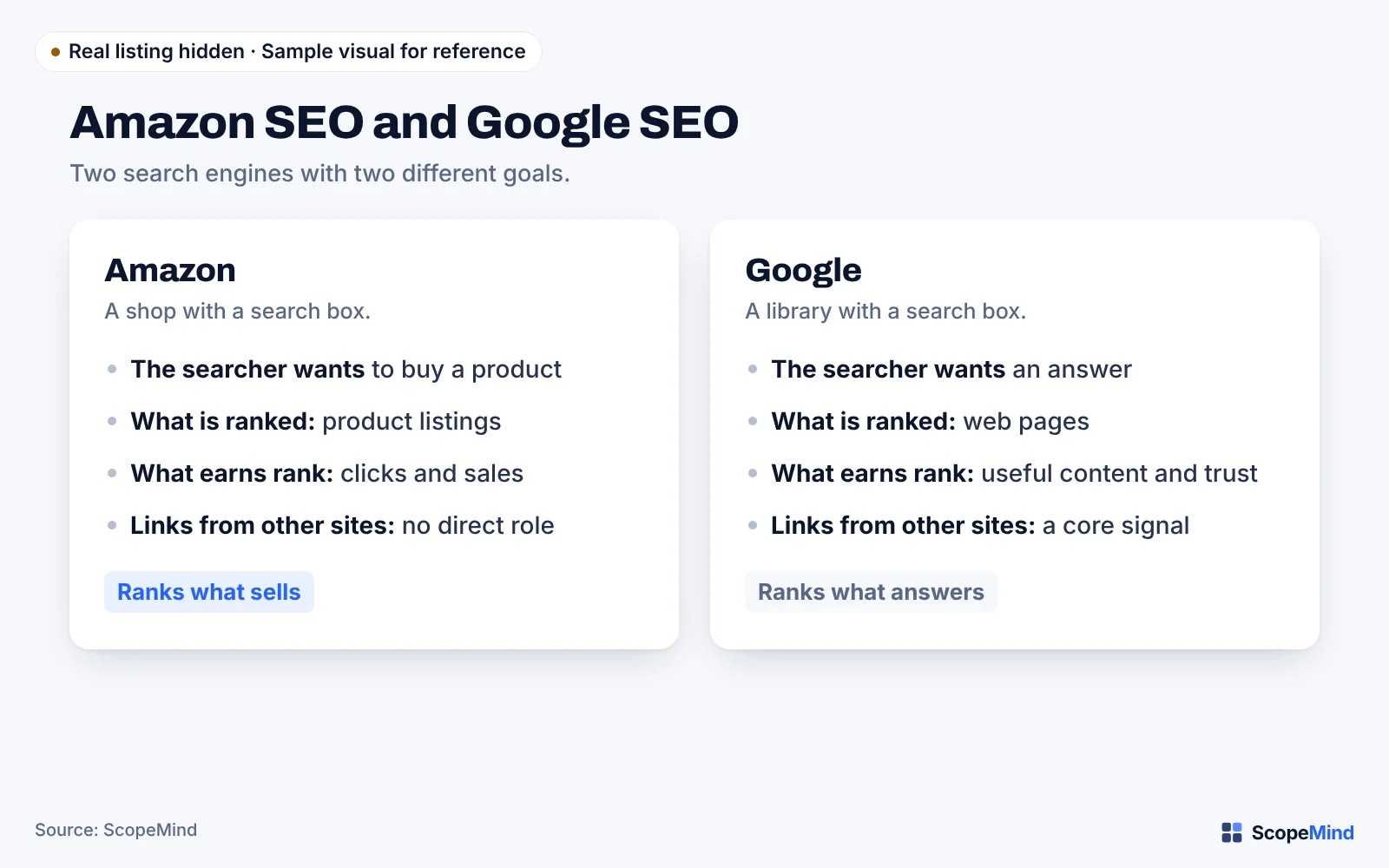
Google ranks pages that answer a question; Amazon ranks products that are likely to be bought.
That one difference explains the rest. On Google, a long, useful article with links from trusted sites can rank for years. On Amazon, nobody links to a listing and nobody reads it for its own sake. What counts is whether shoppers who see it click and buy.
| Question | Amazon | |
|---|---|---|
| What does the searcher want? | To buy a product | To find an answer |
| What is ranked? | Product listings | Web pages |
| What earns rank? | Matching words, clicks and sales | Useful content and trust |
| Do links from other sites count? | Not directly | Yes, a core signal |
| Where do the search words go? | Title, bullet points, backend search terms | Page title, headings and text |
| How fast does it move? | Days to weeks, and it follows sales | Weeks to months |
What is the difference between organic and sponsored positions?
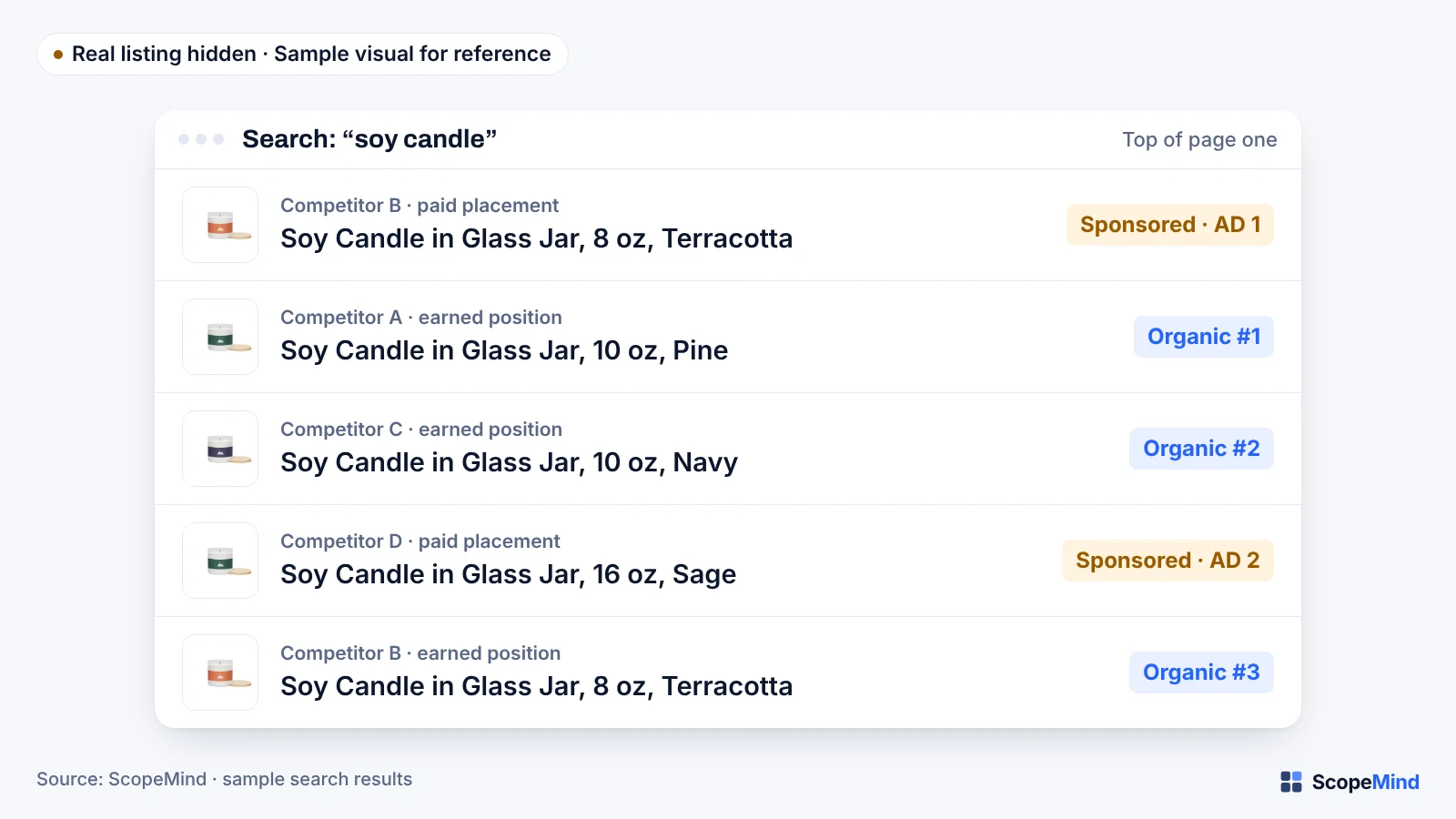
An organic position is earned by the listing; a sponsored position is bought per click, and the two are counted separately.
The same product can hold both for one search term. In the sample at the top of this page, Competitor B appears twice: once as the first sponsored result and once as the third organic result. A shopper sees two listings. A seller should see two different numbers.
This matters because ads can hide a weak organic rank. If you search your main term and see yourself near the top, check whether that is the ad. Turn the ad off and you may be on page three.
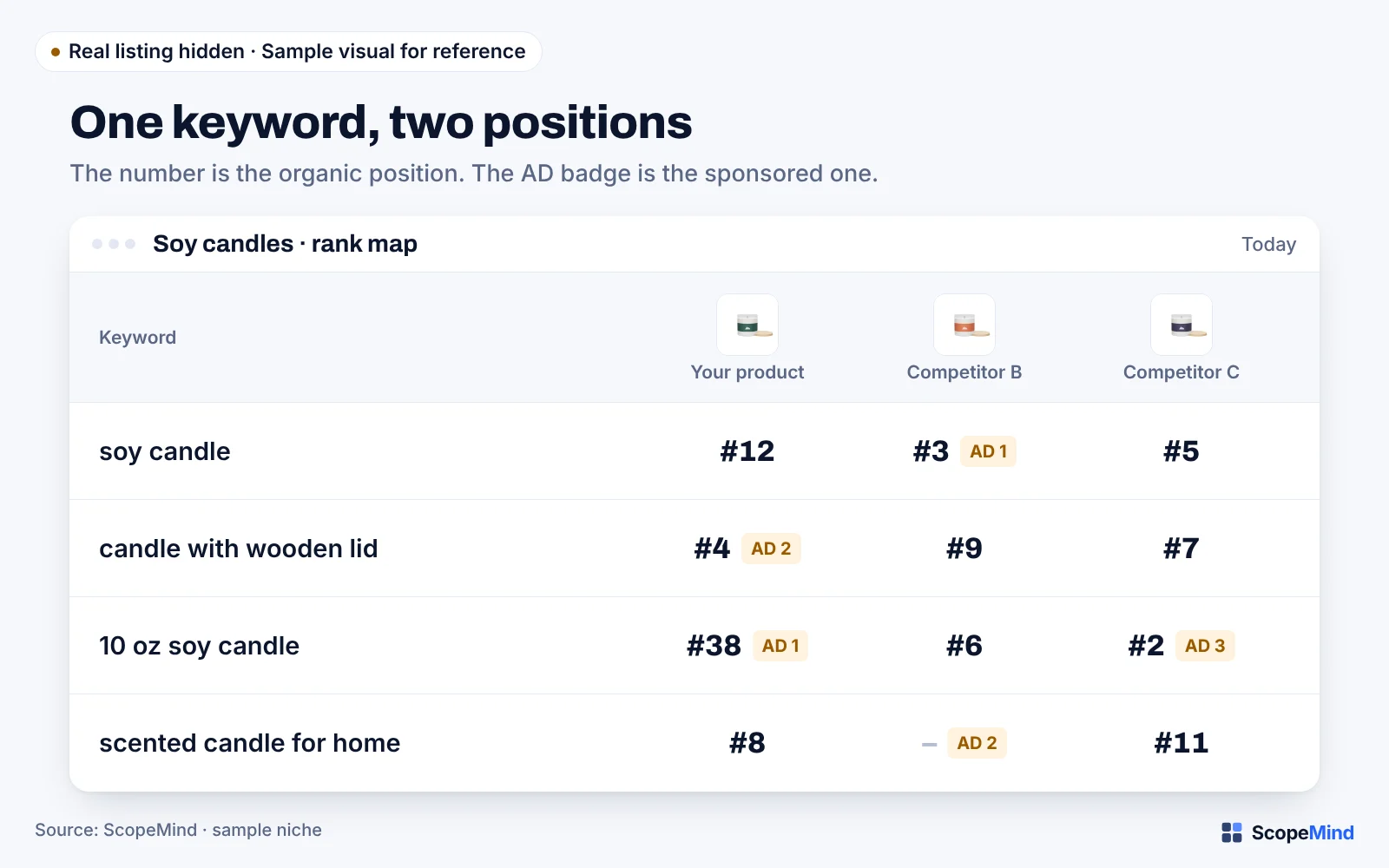
ScopeMind's rank map shows both for every keyword you track. Each cell has the organic position, and a separate AD badge with the sponsored position, for your product and for each competitor, collected once a day.
What changed in Amazon SEO in 2026?
Titles got shorter, the words that left the title moved to other fields, and shoppers can now ask Amazon's AI shopping assistant instead of typing keywords.
- Shorter titles. Most categories now have a 75-character title limit. The old habit of packing every search term into the title no longer fits.
- More fields doing the work. Benefits and uses that used to sit in the title now belong in Item Highlights, the bullet points and the backend search terms.
- Questions as well as keywords. Amazon's AI shopping assistant answers shoppers' questions from what listings and reviews say. A listing that states plainly what the product is, who it is for and what it does gives it something to work with.
What did not change is the core: match the search, then sell. A clear listing that converts was the right answer before 2026 and still is.
Which Amazon SEO best practices still work?
Seven, and none of them is a trick: use the shopper's words, earn the click, make the sale, stay in stock and measure.
- Take your search terms from the products that rank. Type your product into the search box, note the suggestions, and read the titles on page one for each.
- Put the main term in the title, in plain words. One clear product name beats a string of variations.
- Use the bullet points for the next terms. Write them for a person first. A bullet nobody reads does not sell.
- Fill the backend search terms with synonyms and other spellings that are not already in the visible text. There is no need to repeat words, and Amazon limits the field to under 250 bytes.
- Earn the click. Check your main image and price next to the products around you on the results page, at thumbnail size.
- Stay in stock. A product that cannot be bought loses its positions quickly and has to earn them back.
- Track positions daily, organic and sponsored apart, and write down the date of every listing change so you can see what moved them.
Frequently asked questions
- How long does Amazon SEO take to work?
- New listing text is usually picked up within a few days, but the position it earns depends on clicks and sales, which build over weeks. Give a title or image change two to three weeks before you judge it.
- Do Amazon ads improve organic rank?
- Ads do not buy an organic position directly. Sales count toward rank wherever they come from, so an ad that brings sales on a search term often lifts the organic position on that term too. Track both positions to see whether that is happening.
- Do backlinks help Amazon SEO?
- Not the way they help on Google. Amazon does not rank a listing by the links that point to it. Visitors from outside who buy can still help, because the sales count.
- Is Amazon SEO the same as listing optimization?
- Amazon SEO is the part of listing optimization that is about being found in search. Listing optimization also covers what happens after a shopper finds you: the click and the sale.
- What is the A9 or A10 algorithm?
- A9 is the name of the Amazon team that built its product search, and sellers use it as a nickname for the ranking system. A10 is a name used among sellers for later versions; Amazon has not published an algorithm under that name. The advice is the same either way: match the search, then sell.
See where you rank, organic and sponsored
ScopeMind checks your keyword positions and your competitors' every day, and shows organic and sponsored positions apart.
Start tracking keyword positions